Inspired by the loss of my grandmother to Alzheimer’s disease, this fashion collection explores the gradual disappearance of memory, language, orientation, and identity through eight interconnected looks. As the narrative progresses, silhouettes become fragmented, photographs begin to fade, and materials slowly deteriorate — translating the emotional and psychological effects of the disease into physical form.
The project reflects both a personal process of grief and a broader attempt to create awareness for an illness that affects millions of people worldwide.
Rather than presenting Alzheimer’s through words alone, the collection uses fashion as a medium to visualize disappearance, confusion, and the fragile nature of human identity.
What happens when a person slowly disappears?
WHO AM I? - An Alzheimer’s Story
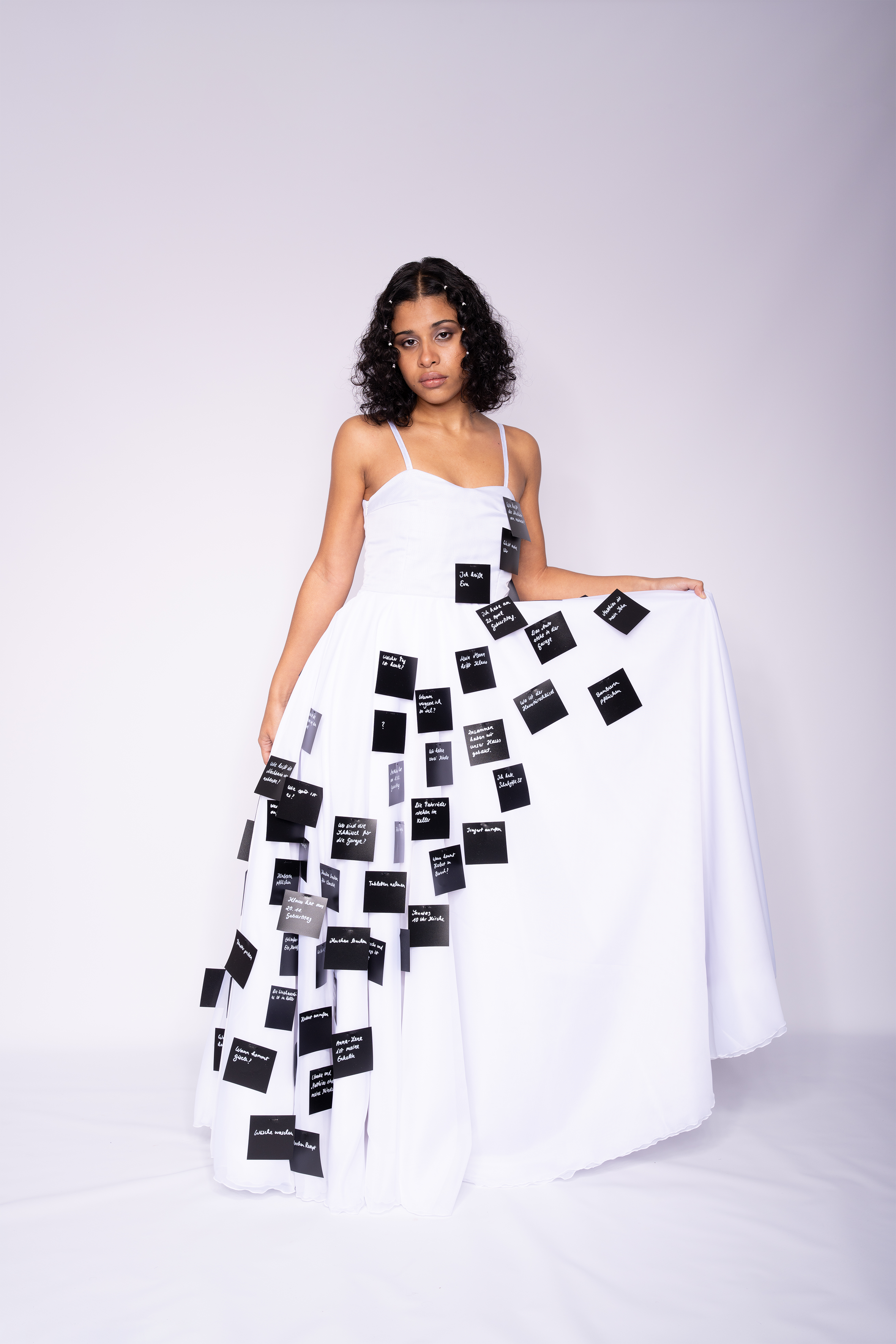
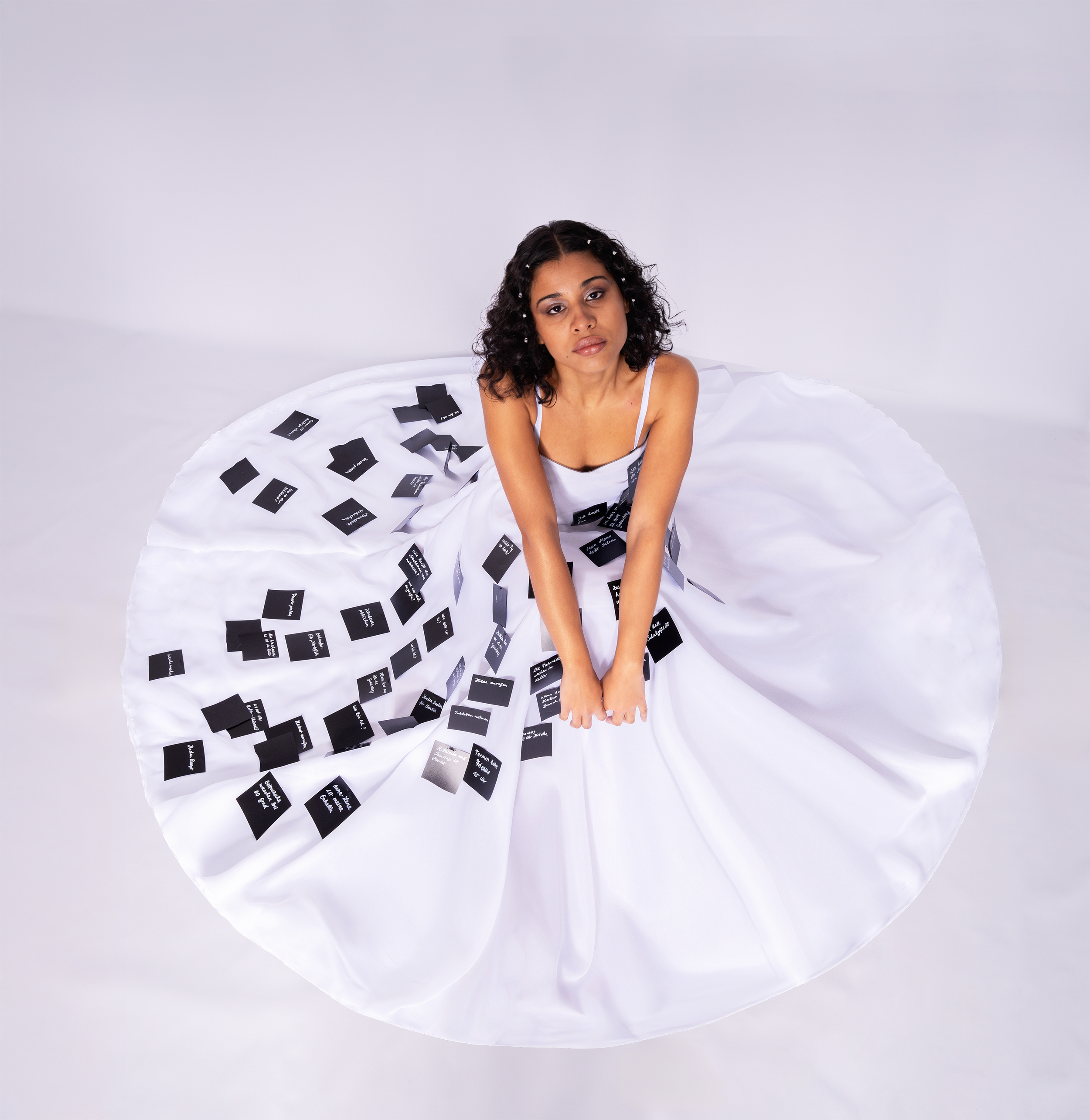
Look 1: The Post-It Dress
The first look represents the beginning of the disease. Small moments are forgotten. Names, appointments, familiar details. The black post-it notes symbolize the attempt
to hold on to memories before they disappear.
Look 2: Displaced
This outfit reflects the first feeling of confusion. The silhouette appears unstable and displaced. The asymmetry represents the moment when something no longer feels right, even if it cannot yet be explained.
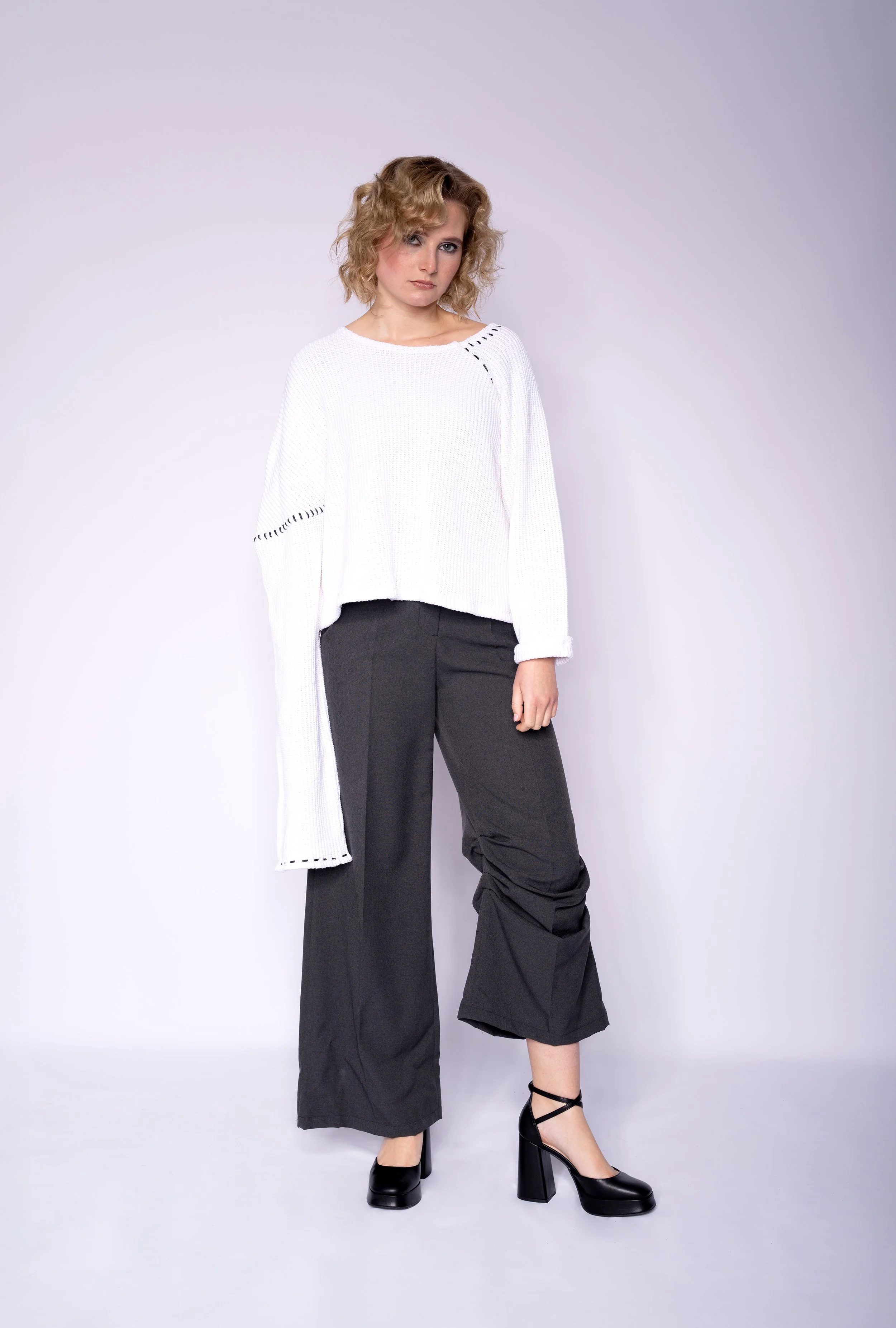
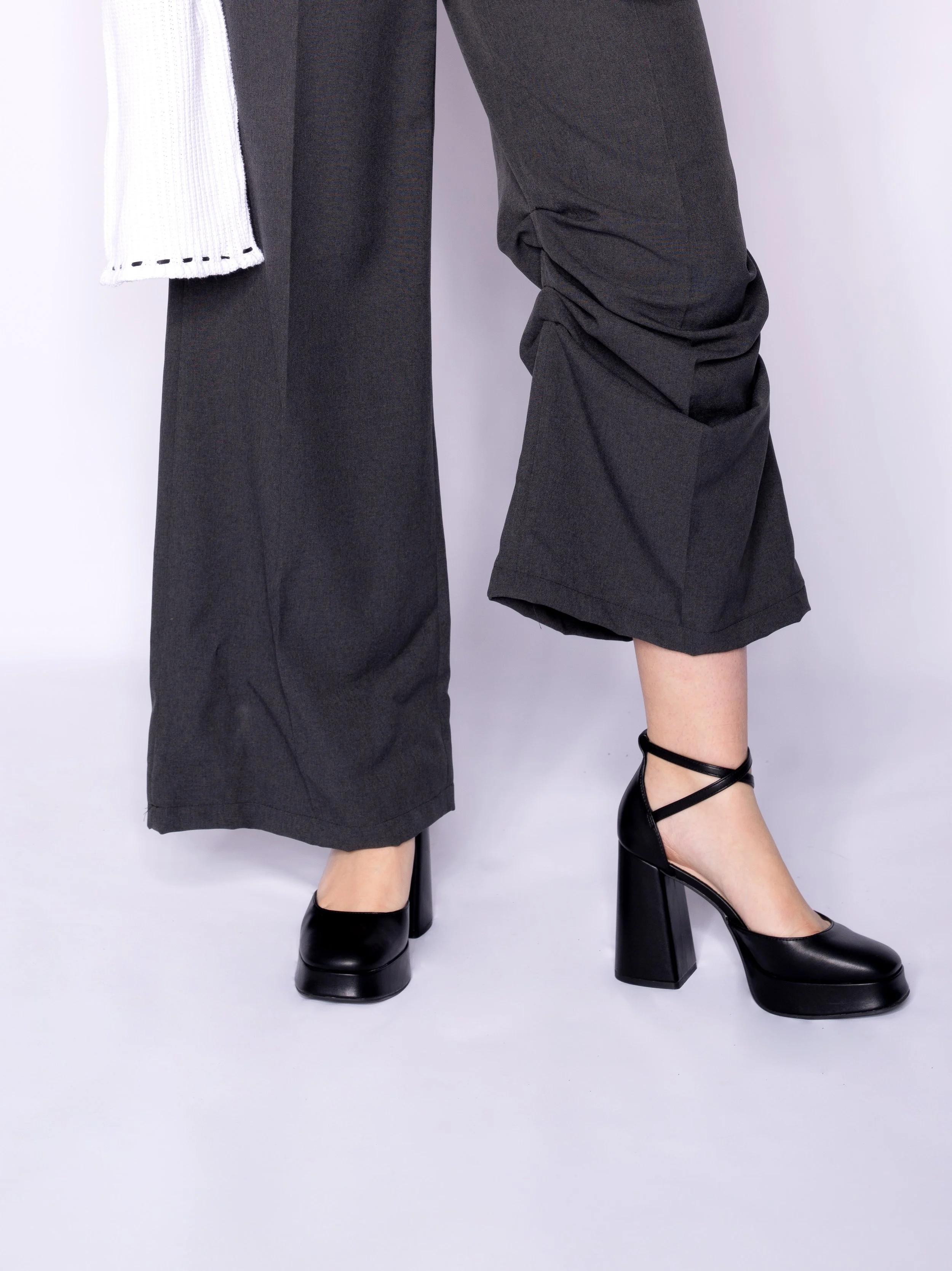

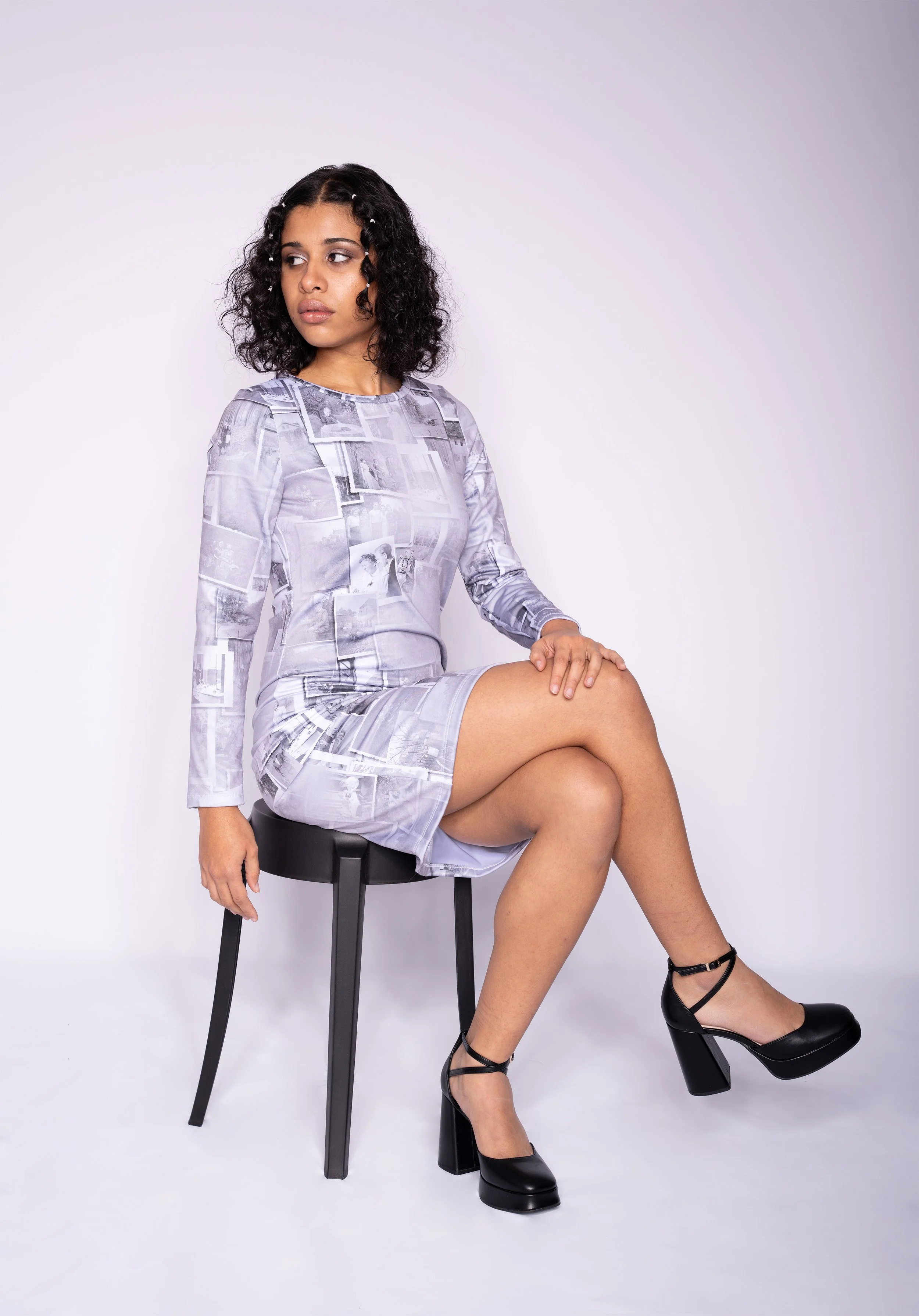
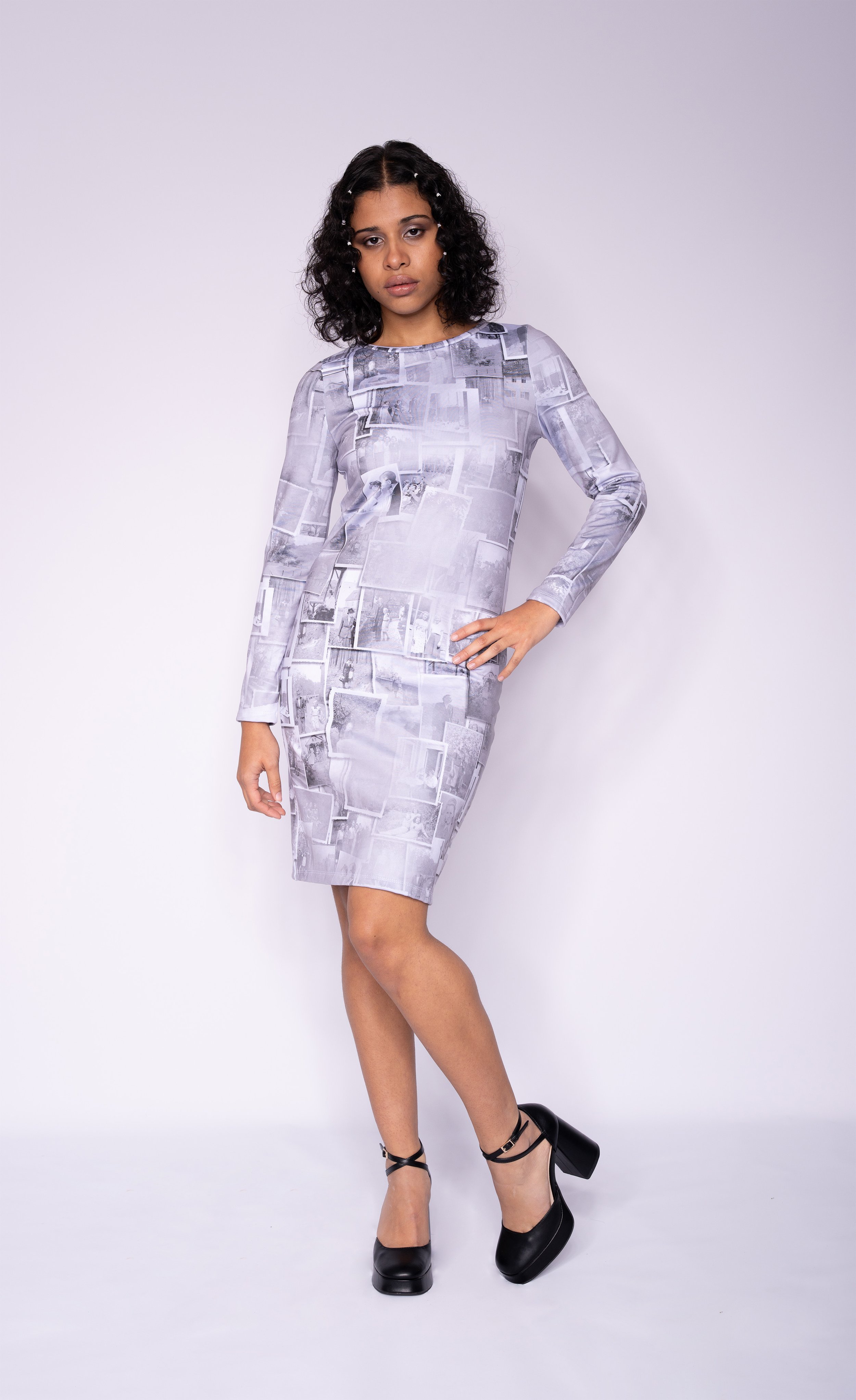
Look 3: The Memory Dress
Old family photographs were printed onto the fabric and digitally blurred. The fading images represent memories that slowly become inaccessible. Faces remain visible, but details begin to disappear.
Look 4: Entrapped
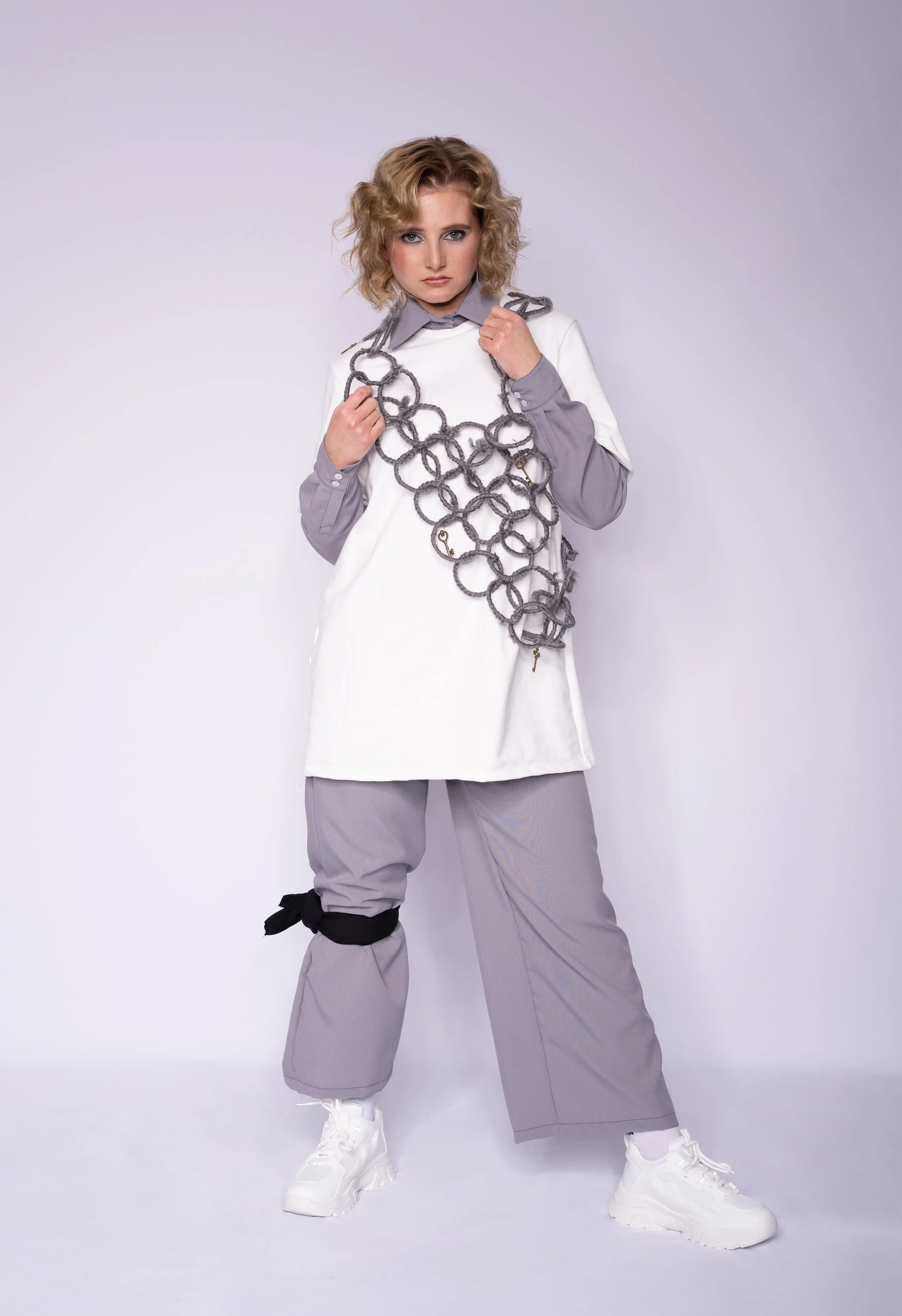
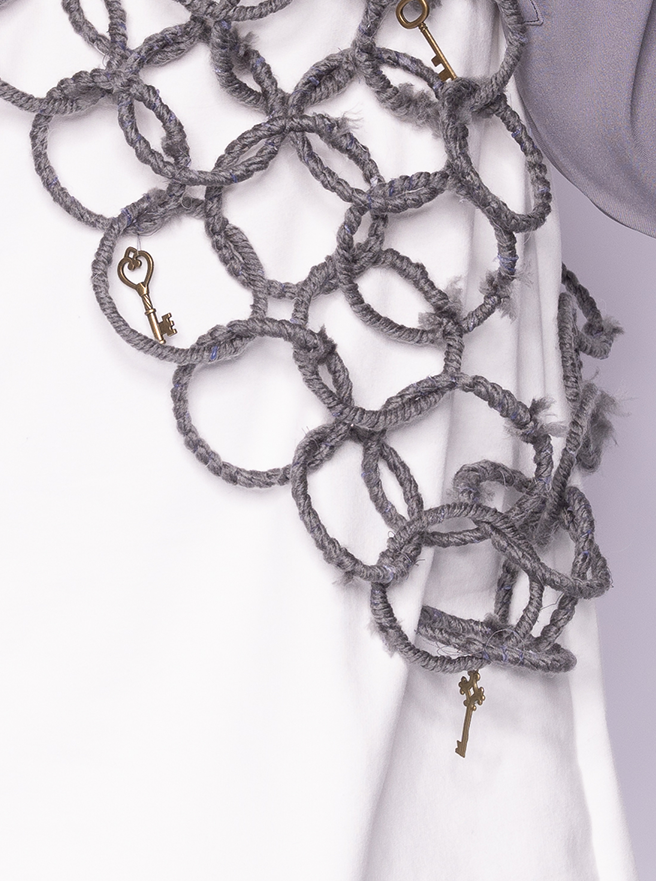
This look symbolizes the feeling of being trapped inside the illness. Different garments are layered on top of each other without logic or coordination, reflecting the confusion and disorientation caused by Alzheimer’s disease. The handmade chain structure resembles a prison surrounding the body, representing the mental confinement and loss of control experienced during the progression of the illness.
Look 5: The Memory Vest
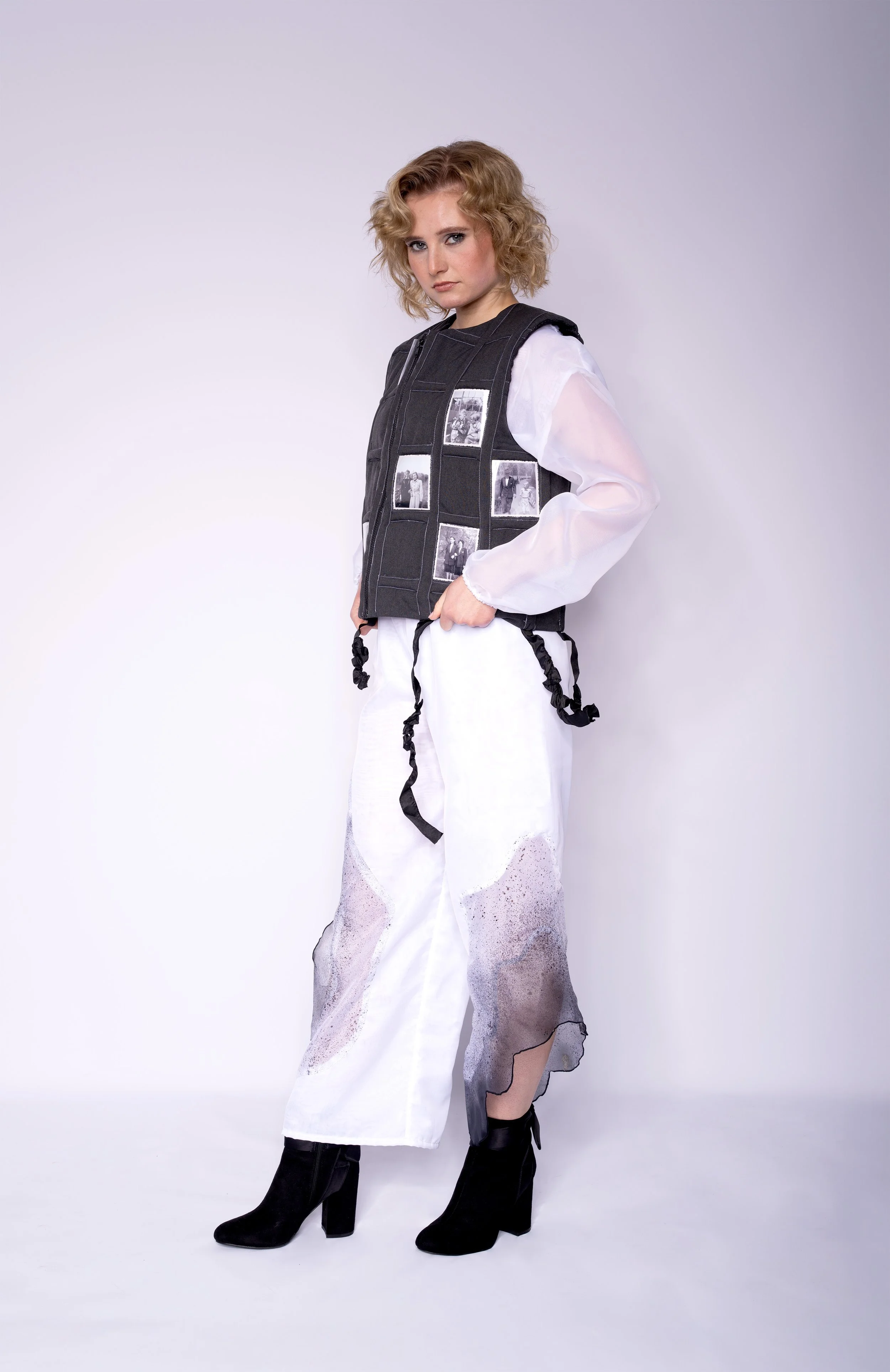
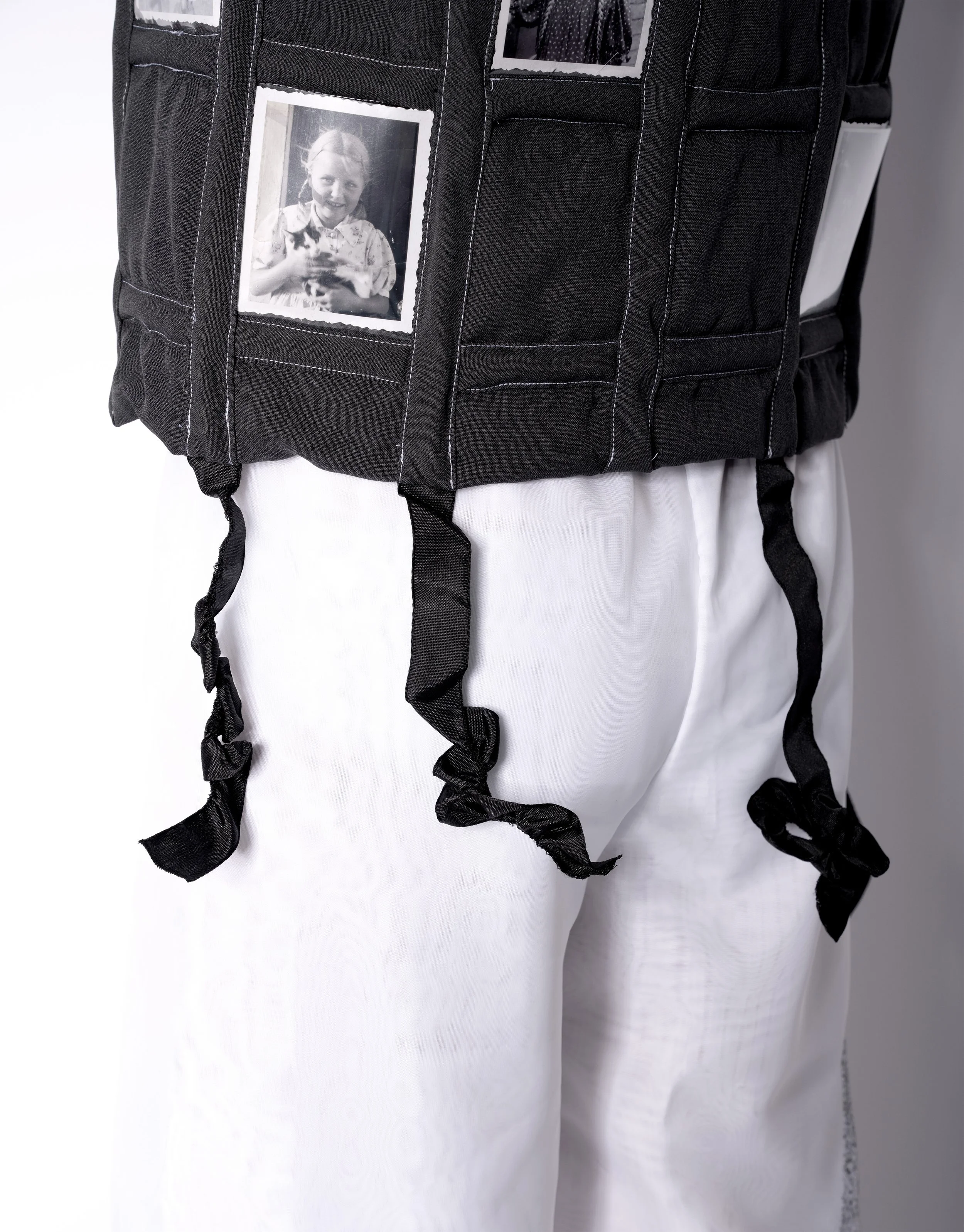
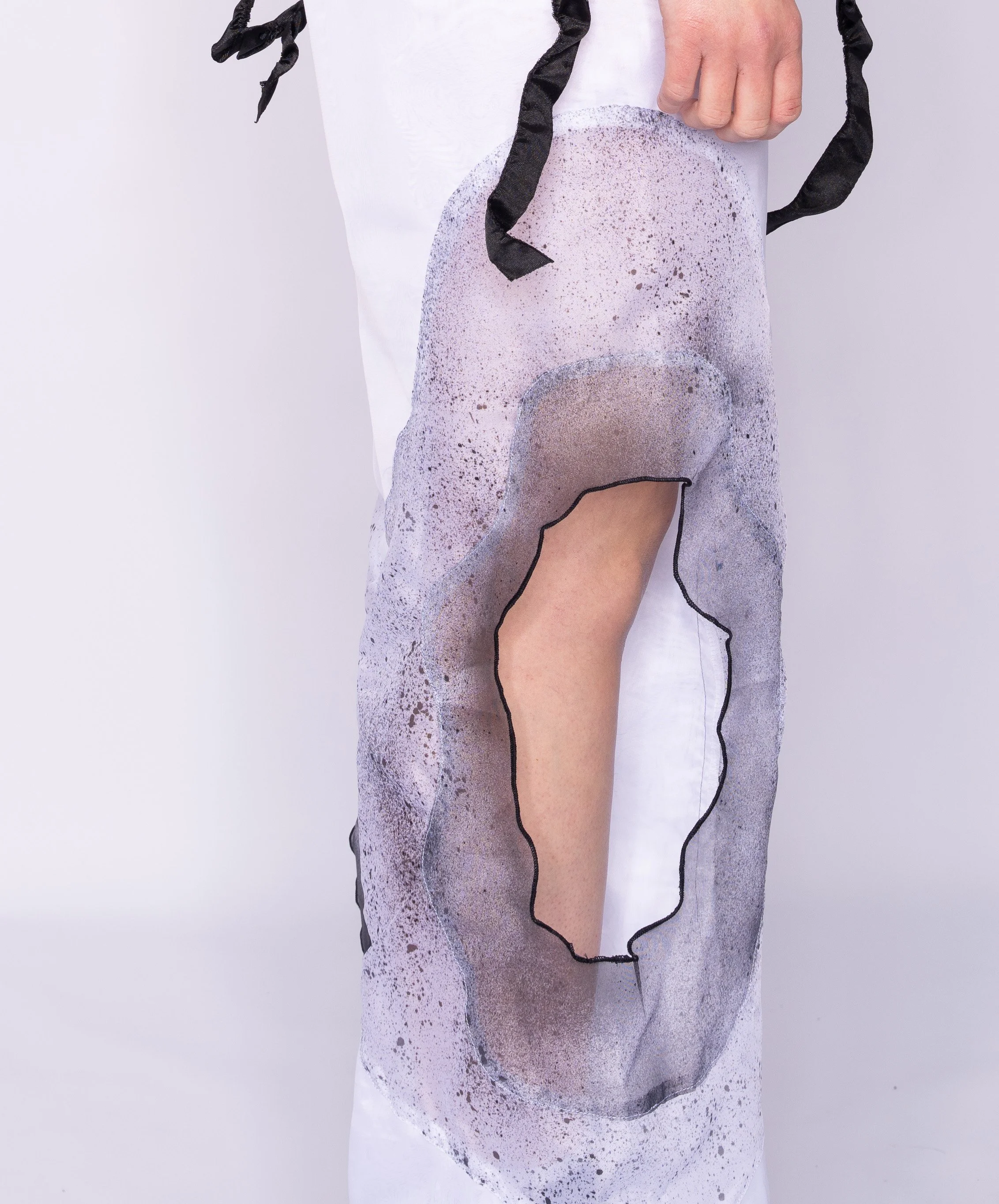
Photographs are locked behind transparent layers and grid structures. The memories still exist, but they can no longer be reached. The damaged trousers reference the physical and mental deterioration caused by the disease.
Look 6: The Demon Dress
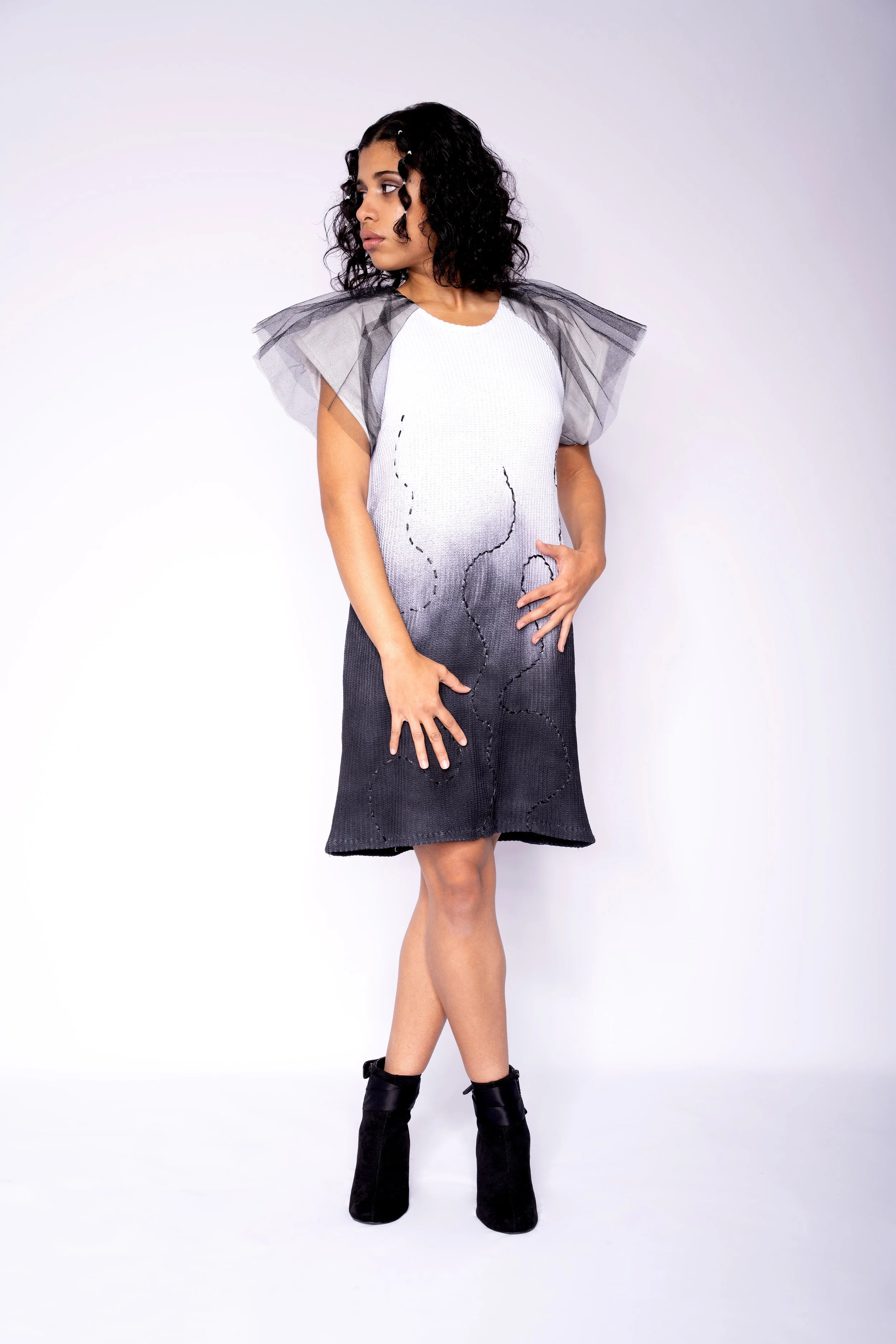
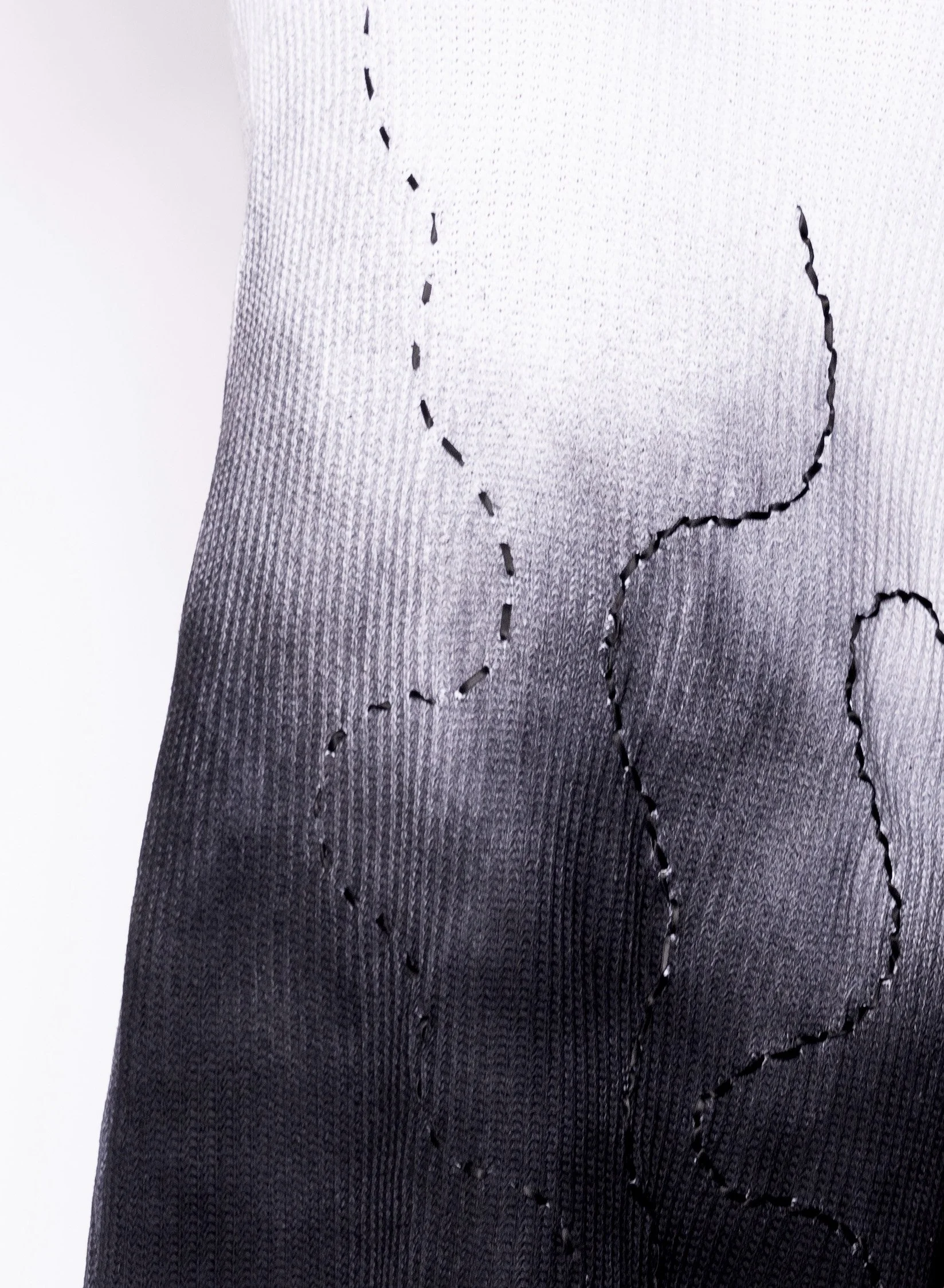
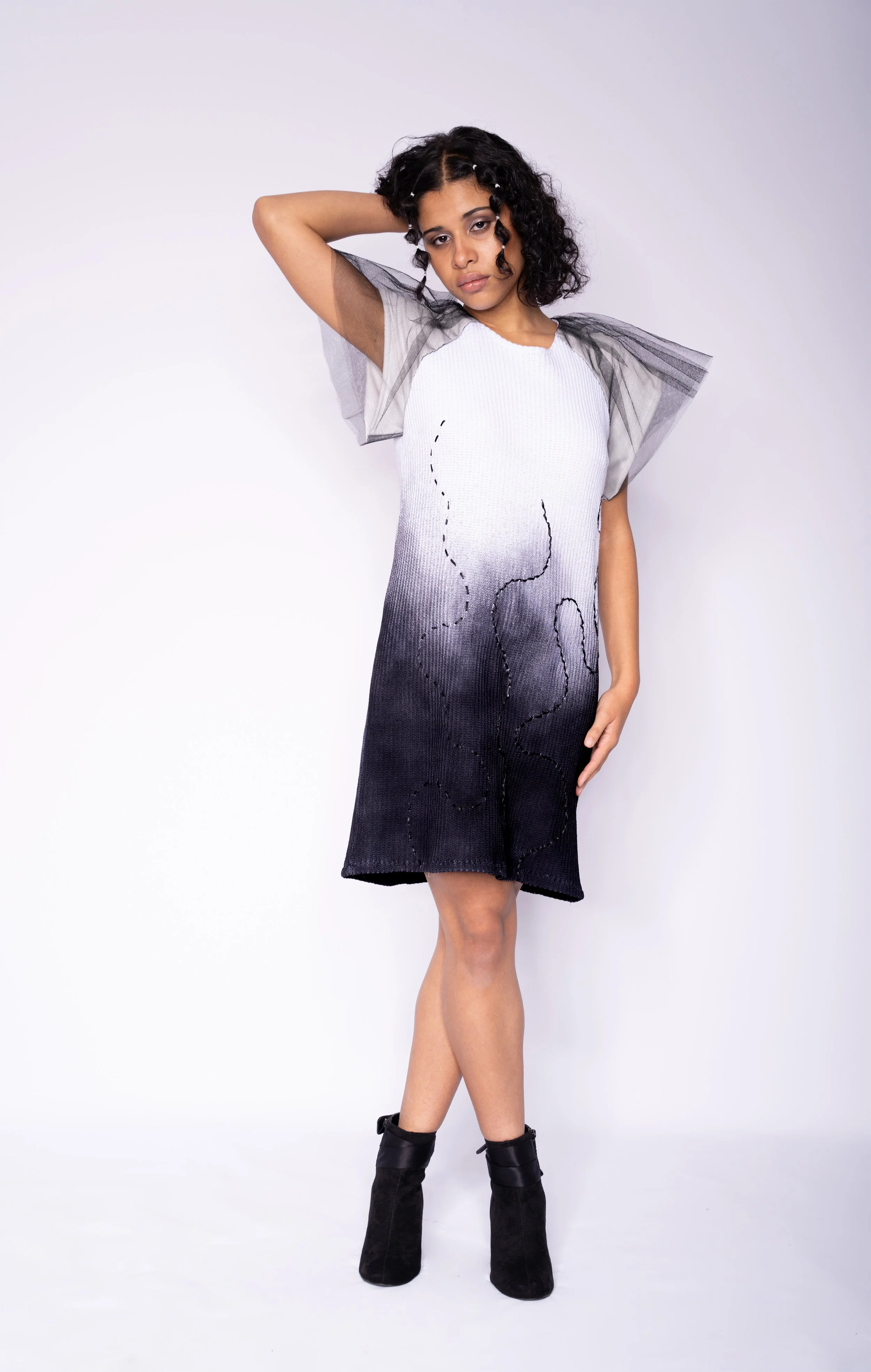
The black color spreads upward across the dress like an infection. Wool structures grow across the body like a living force. The wing-shaped sleeves symbolize the desperate attempt to escape the illness.
Look 7: The Bubble Dress
This outfit represents the final destruction of the mind. The bubble-like forms reference the structure of the brain as it begins to collapse. Underneath, black grid lines become visible and look like the remaining framework after everything else has disappeared.
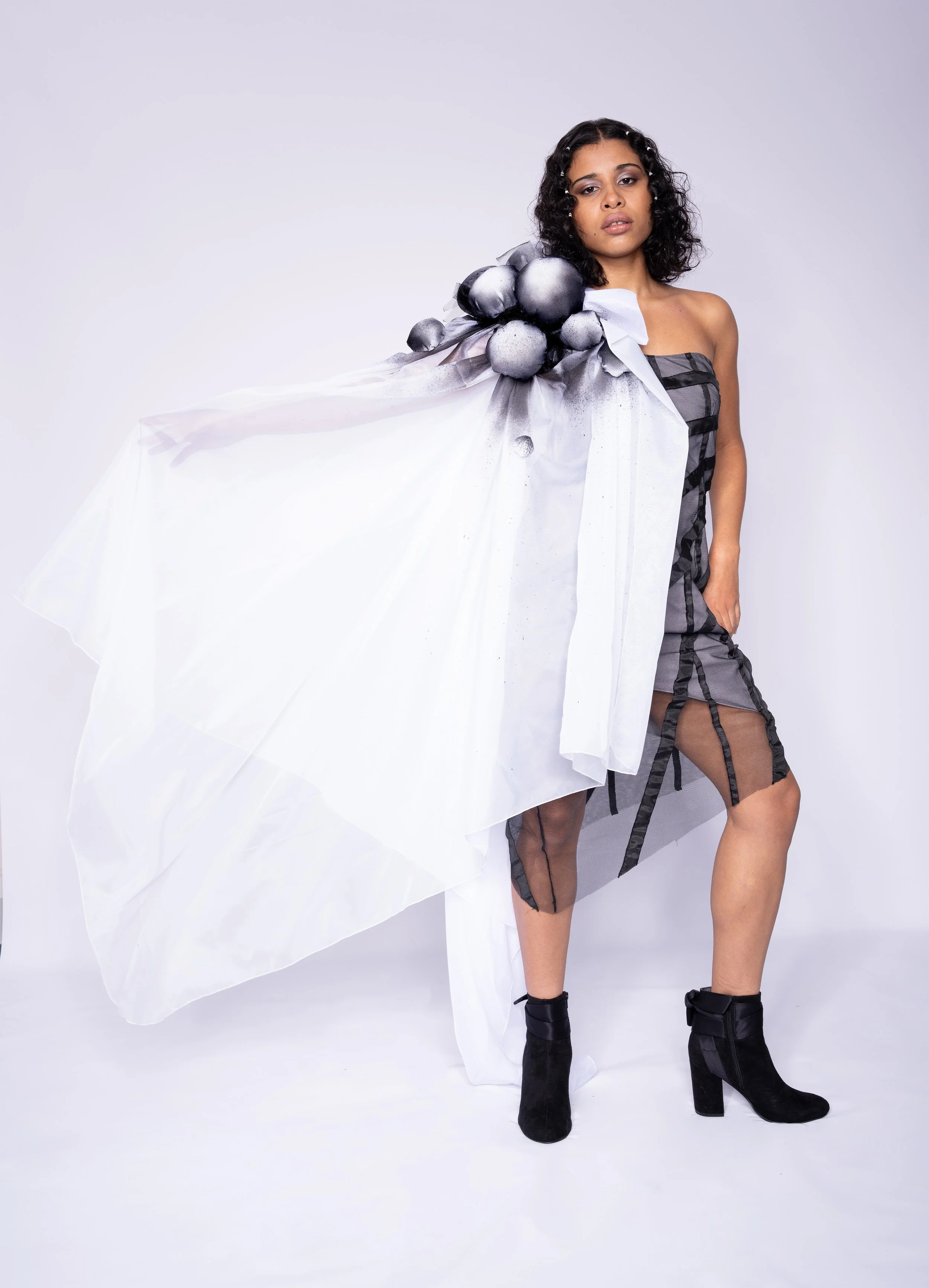
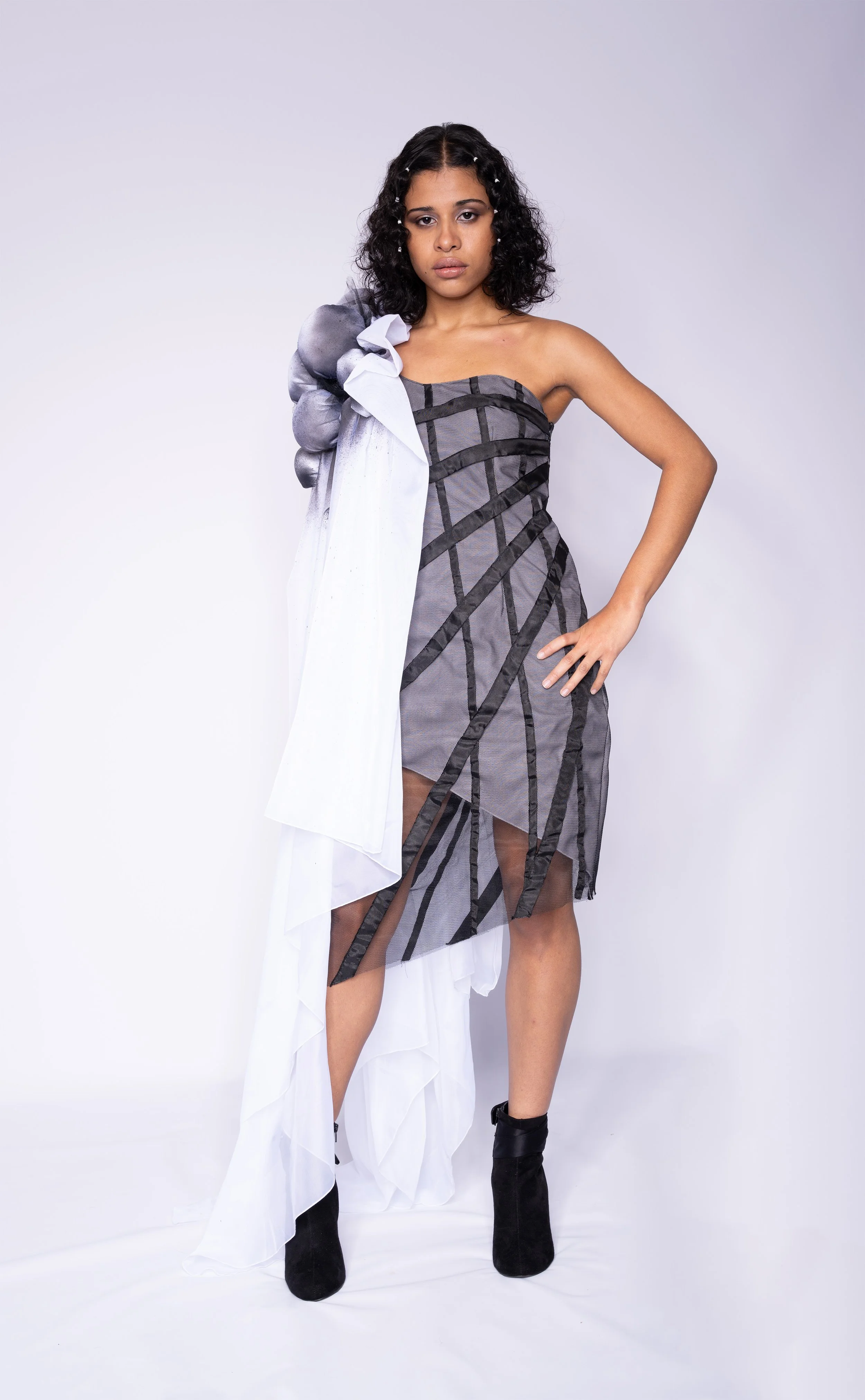
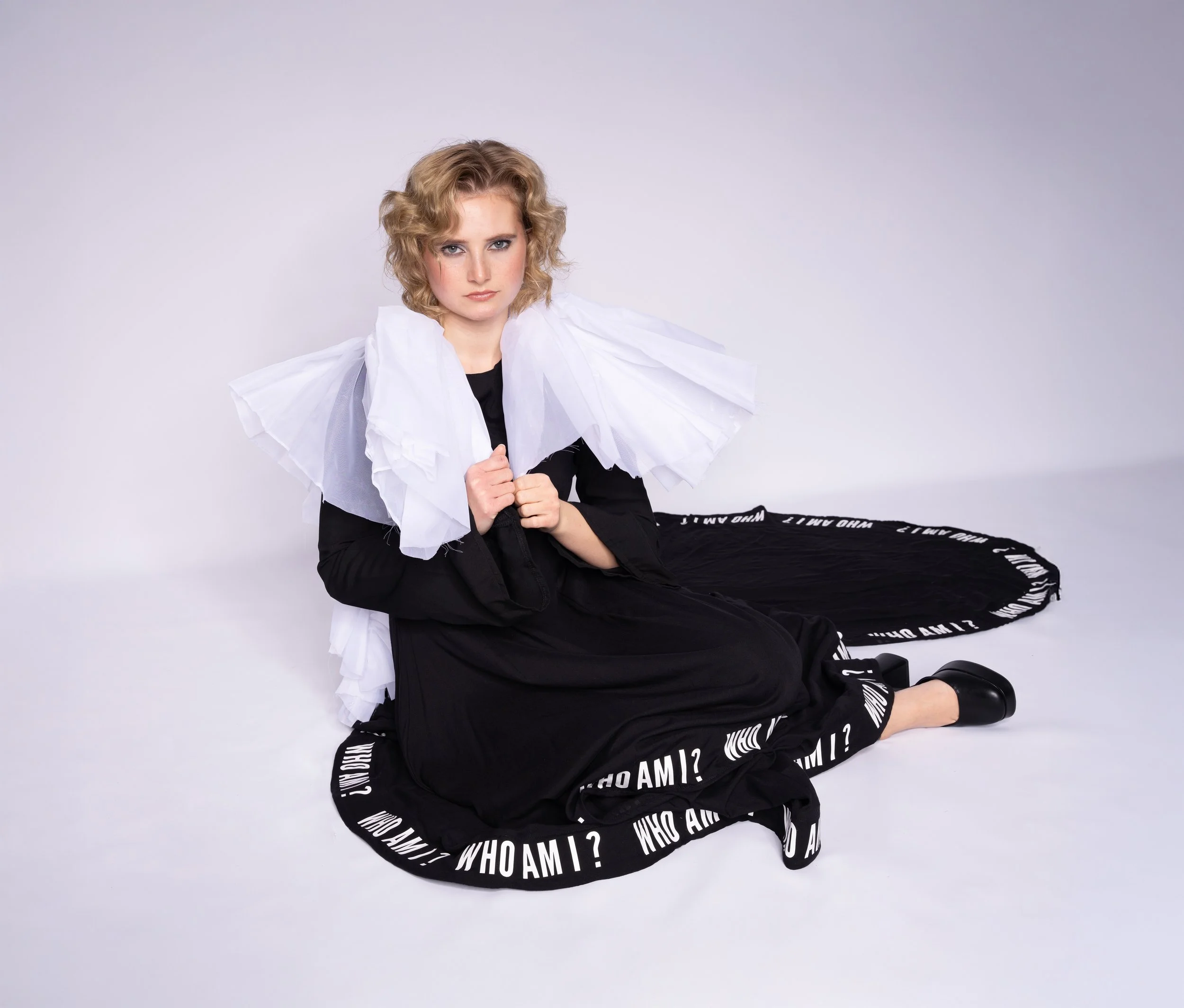
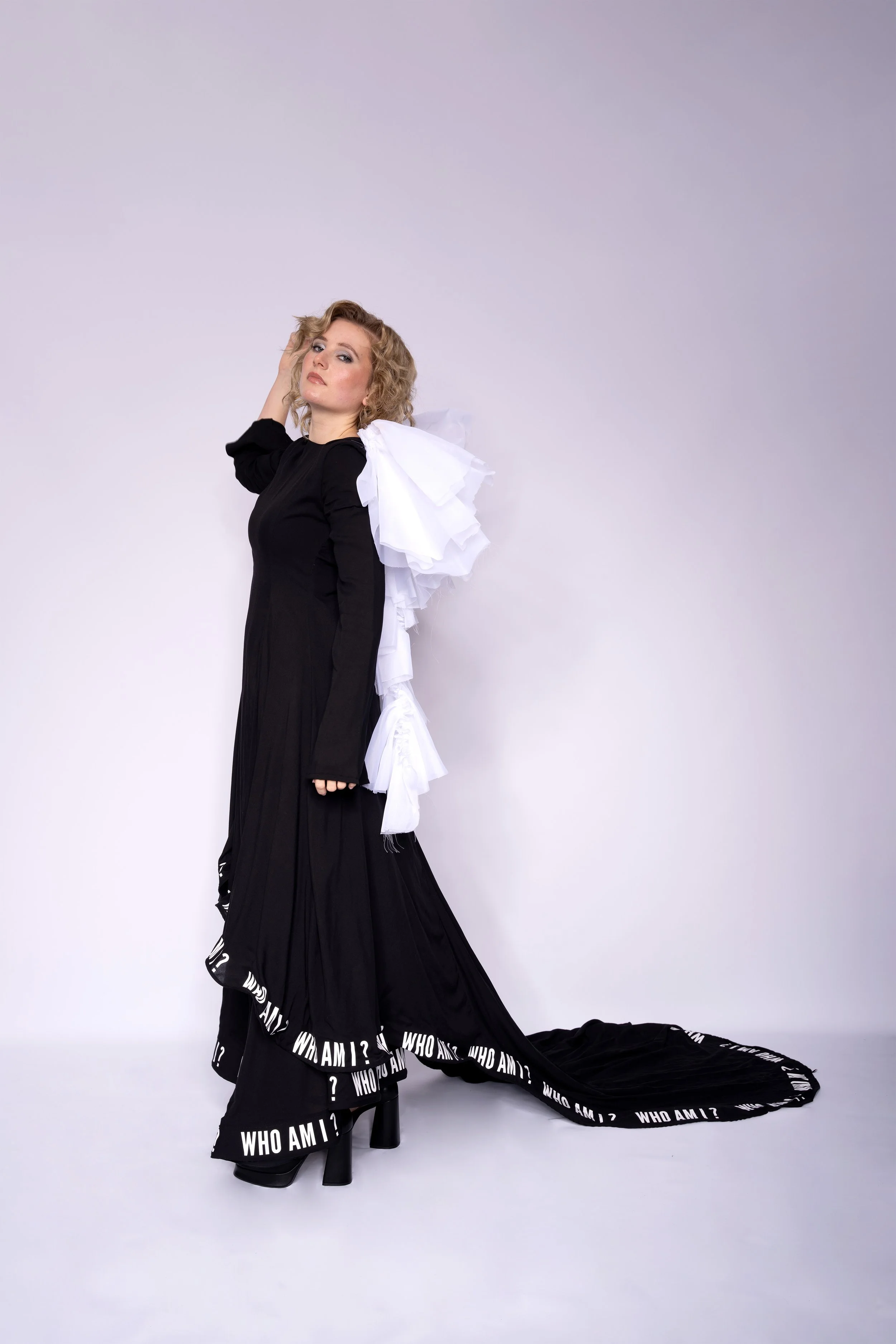
Look 8: The “WHO AM I?” Dress
The final black dress represents the complete loss of identity. The question “Who am I?” appears at the hem of the garment, symbolizing the moment when a person no longer recognizes who they are. The white tulle forms on the shoulders represent the release of the soul after death.